
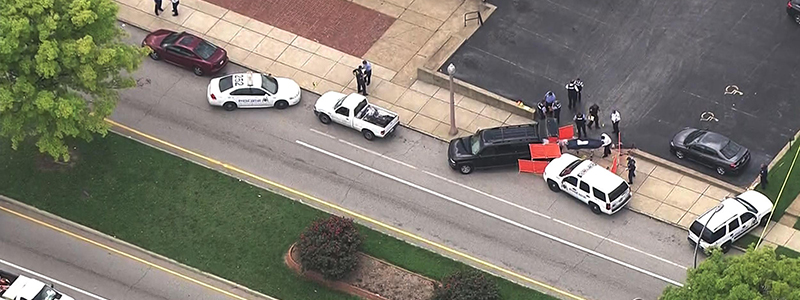
Michael Brown, an unarmed black teenager, was shot and killed on Aug. 9, by Darren Wilson, a white police officer, in Ferguson, Mo., a suburb of St. Louis. The shooting prompted protests that roiled the area for weeks. On Nov. 24, the St. Louis County prosecutor announced that a grand jury decided not to indict Mr. Wilson. The announcement set off another wave of protests.
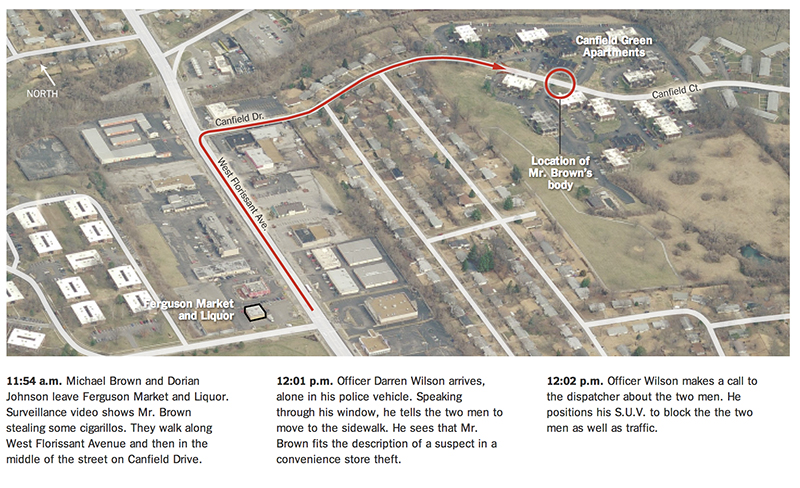
Several witnesses reported seeing an altercation in the S.U.V. between Officer Wilson and Mr. Brown. Some said Mr. Brown punched Officer Wilson while Mr. Brown was partly inside the vehicle. At least one witness said no part of Mr. Brown was ever inside the vehicle. In his own testimony, Officer Wilson said that Mr. Brown reached into the vehicle and fought for his gun.
Examiners found Mr. Brown’s blood or other DNA outside the driver’s door, outside the left rear passenger door, inside the driver’s door, on the upper left thigh of Officer Wilson’s pants and on Officer Wilson’s shirt and weapon.
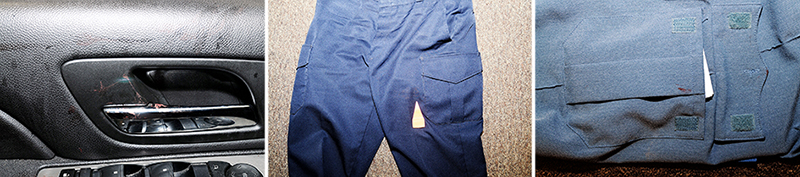
Two shots were fired by Officer Wilson. One bullet was found lodged in the driver’s door. Mr. Brown had a graze wound on his right thumb, consistent with a close range shot.
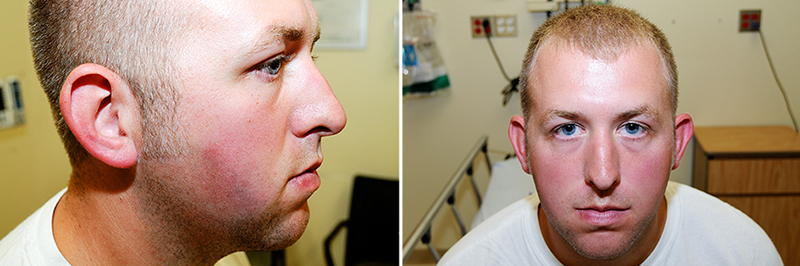
A medical examination indicated that Officer Wilson had some swelling and redness on his face.
Some witnesses said Mr. Brown never moved toward Officer Wilson when he was shot and killed. Most of the witnesses said the shots were fired as he moved toward Officer Wilson. The St. Louis County prosecutor said the most credible witnesses reported that Mr. Brown charged toward the officer. Officer Wilson also said that Mr. Brown charged at him, making “a grunting, like aggravated sound.”
Some witnesses said that Mr. Brown had his hands in the air. Several others said that he did not raise his hands at all or that he raised them briefly, then dropped them and turned toward the officer. Others described the position of his arms as out to the side, in front of him, by his shoulders or in a running position.
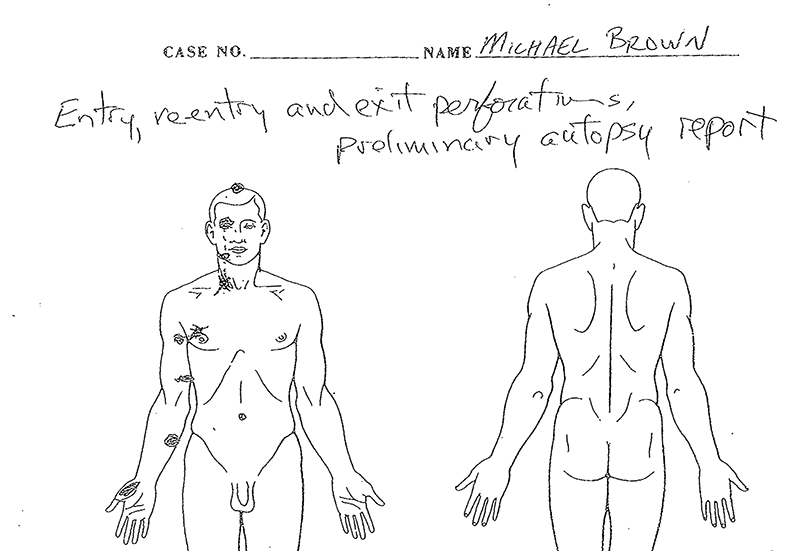
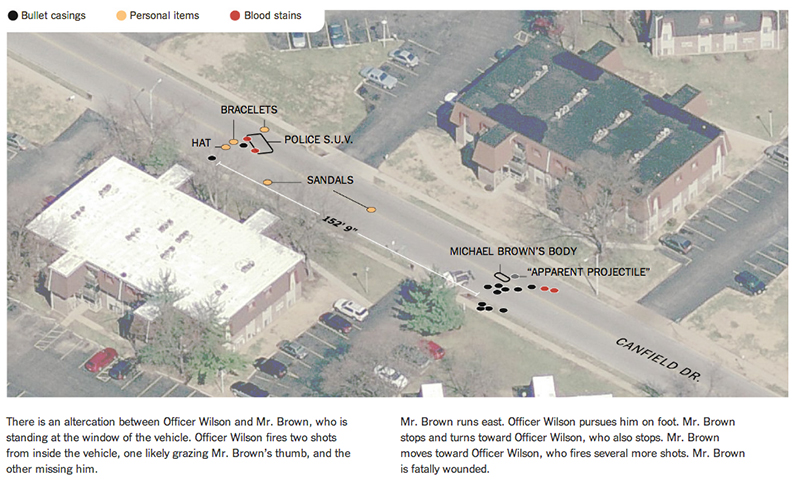
Officer Wilson fired 12 rounds, including two from the car and 10 more down the street, where Mr. Brown sustained at least six more wounds, including at his forehead and the top of his head, which suggested that his body was bent forward at the waist.
Mr. Brown’s body was about 153 feet east of Officer Wilson’s car. Mr. Brown’s blood was about 25 feet east of his body. This evidence supports statements that Mr. Brown continued to move closer to the officer after being hit by an initial string of bullets.